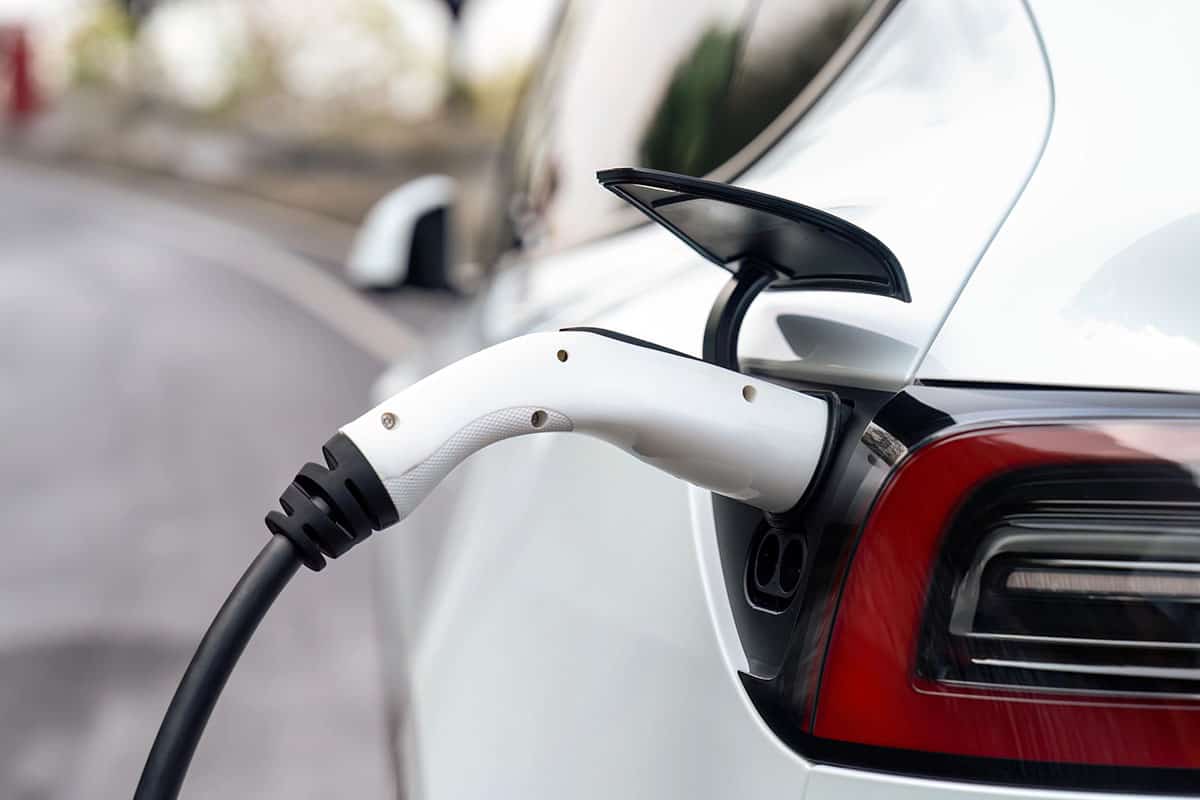
Giga Texas, Tesla’s Austin manufacturing plant, has been producing vehicles at scale since 2022. The result is visible on any Central Texas highway: Tesla’s have moved from curiosity to commuter car. Before you buy one, a question worth a serious answer, are they more expensive to insure with an insurance agency in Buda TX?
Generally, yes. Insurance industry claims data shows Tesla’s cost more to cover than comparably priced gasoline-powered luxury vehicles. This isn’t an arbitrary surcharge on EVs. Premiums reflect what a vehicle actually costs to repair after a claim, and Tesla’s have several characteristics that push those costs higher than most cars at the same price point.
Table of Contents
Factor 1: The High Cost of Repairs
Repair costs are the main reason Tesla premiums run higher. A low-speed collision that dents a traditional car’s steel bumper might run a few hundred dollars at a local shop. The same impact on a Tesla can cost several times that.
Aluminum body panels: Tesla uses aluminum extensively in its body construction. Aluminum is lighter than steel and doesn’t rust, but it doesn’t bend back into shape, it creases. Many damaged sections have to be cut out and replaced rather than straightened, and that work requires specialized tools and certified technicians. Repair costs are significantly higher than a comparable steel-body vehicle.
Every Tesla ships with multiple cameras and sensors that power Autopilot and other driver-assist features. Clip a bumper hard enough to shift the front sensor array, and you’re not just replacing plastic, you’re also paying for a full recalibration process to confirm those systems still read the road correctly. That recalibration isn’t optional; a mis-calibrated camera is a safety issue, so it’s a standard line item on nearly every bumper claim.
Insurance companies set premiums based on expected claims costs. When the average repair bill on a vehicle class runs substantially higher than comparable vehicles, the base premium has to account for that gap, even before you’ve filed a single claim.
Factor 2: Parts, Labor, and Availability
Expensive repairs get worse when there are few shops qualified to do the work. Tesla’s service network has expanded in Texas, but it’s still concentrated around major metros. Outside Austin, Houston, Dallas, and San Antonio, getting a Tesla into a certified facility can mean days of lead time, or trailering the vehicle.
- Higher labor rates: Technicians certified to work on Tesla’s command higher wages than standard auto body labor. The work demands more training and more specialized tooling, and that shows up in the labor portion of every repair invoice.
- Longer repair times: When parts are backordered or certified shops are fully booked, a repair that takes three days on a conventional vehicle can stretch to two or three weeks on a Tesla. That gap has a real cost, insurers typically cover rental cars during repairs, and extended timelines add meaningfully to the total claim.
Factor 3: The Performance Factor
The base Model 3 Long Range does 0-60 in about 4.2 seconds, quicker than a base Porsche 911 from a decade ago. That acceleration puts Tesla’s in the same underwriting bucket as performance vehicles, not family sedans. Insurance actuaries have decades of claims data showing high-performance cars generate more frequent and more expensive claims. Your premium reflects the pool you’re priced into, not just your own driving record.
Factor 4: Hail and Glass
Central Texas hail is a recurring cost, not a rare event. The Austin-to-Waco corridor sits in one of the most hail-active corridors in the country, Bell County has seen storms large enough to total vehicles several times over the past decade. A conventional car takes dents that a body shop can remove with paintless dent repair. A Tesla has a glass roof that runs nearly the full length of the cabin, and glass doesn’t pop out.
That roof is a single piece of tempered glass, it can’t be patched, only replaced. Depending on the model, replacement runs $1,500 to $3,000 or more, compared to a few hundred dollars for a standard windshield. For carriers writing policies in Bell and Travis counties, that exposure isn’t theoretical; it’s in their actuarial tables. The combination of high replacement cost and high hail frequency pushes comprehensive premiums up noticeably relative to conventional vehicles.
The Case for Shopping Multiple Carriers
Tesla rates vary more between carriers than almost any other vehicle category right now. Companies that have built out EV claims infrastructure, parts sourcing, battery diagnostics, calibration, can price more precisely and often more competitively. Others are still pricing in uncertainty: they don’t have enough long-term data on battery degradation and high-voltage repair costs, so they pad the premium. The spread between an aggressive quote and a cautious one can easily run several hundred dollars a year for the same driver and the same car.
An independent agency can pull quotes across multiple carriers and compare them directly, something a captive agent working for a single company cannot do. Beyond the base premium, we look for carriers that offer EV-specific endorsements: coverage for home charging equipment, or gap protection that accounts for faster-than-average depreciation on luxury EVs. For most Tesla owners we work with, shopping the market produces more savings than any single discount would.
FAQs
Does Tesla Insurance offer the lowest rates in Texas?
Tesla’s insurance product uses real-time driving behavior, acceleration, braking, cornering, phone use, to set your premium. For disciplined drivers who score consistently well, it can be cheaper than a traditional policy. The catch is volatility: one demanding commute week, a long highway trip with aggressive merging, or a stretch of hard braking events can move your rate in ways a fixed-premium policy won’t. Many owners decide the predictability of a traditional policy is worth a modest cost premium.
Is a Model 3 significantly cheaper to insure than a Model S?
Yes, typically by a meaningful margin. The Model 3 and Model Y are Tesla’s volume vehicles, parts are widely stocked, repair shops are familiar with them, and lower purchase prices mean lower insured values. The Model S and Model X carry air suspension systems, larger battery packs, and in the case of the X, falcon-wing doors that require specialized calibration after significant body work. Each of those details adds to the repair estimate, and repair estimates drive premiums.
Are there any discounts for electric vehicles in Texas?
Texas doesn’t mandate EV discounts, but a number of carriers offer a “green vehicle” or “alternative fuel” discount on their own. These typically run 2 to 5 percent off the base premium, real money, but rarely enough to offset the higher base rate driven by EV repair costs. The more effective approach is finding a carrier that prices EVs competitively from the start rather than chasing a modest discount on top of an already-elevated rate.
Why are my Tesla premiums higher even though it has the best safety ratings?
Safety ratings measure one thing: how well a car protects occupants in a crash. That matters for the bodily injury portion of your premium. But your policy also covers collision and property damage, and those rates are set by repair cost, not crash performance. A Tesla can ace every NHTSA test and still cost far more to fix after a minor fender-bender than a comparable gas-powered sedan. Strong safety scores help one bucket; they don’t move the needle on the other two.
Does Autopilot lower my insurance rates?
As of 2025, no major U.S. carrier offers a named discount for Autopilot or Full Self-Driving. Some underwriters have flagged the opposite concern: drivers who over-rely on driver-assist technology and then cause an accident create complicated liability questions. Until actuaries have enough years of claims data to draw a statistically clean line between FSD usage and lower accident rates, the feature lands as a neutral factor, or occasionally a slight negative, in most quote calculations.
Why is my Tesla Model 3 insurance quote higher than my old BMW or Lexus?
The gap isn’t about purchase price, it’s about repair complexity. A BMW 3 Series fender bender goes to a well-staffed dealer network with standard parts typically on the shelf. The same fender bender on a Model 3 requires a Tesla-certified body shop (far fewer of them exist), OEM parts that can take weeks to arrive, and a full camera and sensor recalibration before the car can legally leave the lot. That longer, more specialized repair process is exactly what insurers are pricing when your quote comes back higher.
With the Gigafactory in Austin, are parts becoming cheaper and more available?
The Gigafactory should help over time, but it’s not the constraint driving your premium right now. The real bottleneck is the repair network: Texas has far fewer Tesla-certified body shops than California, and that gap doesn’t close just because a battery plant opens nearby. Technicians need specific training, tools, and facility certification, none of that scales overnight. Parts availability will improve as local production ramps up, but labor costs and repair wait times will stay elevated until the certified shop network catches up to demand. That’s the number your insurer is actually watching.
What Your Premium Actually Reflects
Your car insurance quotes in Buda isn’t arbitrary, it’s what the insurance math produces when you account for what these cars actually cost to fix. The high-voltage battery pack, proprietary body panels, and integrated sensor array that make the car perform the way it does are also expensive to repair or replace after a claim.
Certified Tesla body shops and EV-qualified technicians are still unevenly distributed across most markets, which drives up both repair costs and claim duration. That network is expanding, and premiums may ease as the repair network catches up with the volume of EVs on the road. For now, the number on your declarations page reflects where the technology actually is, not where it’s headed.
EV insurance rates shift as carriers accumulate more real-world claims data, which means the best carrier for your situation today may not be the best one in 18 months. Matt Patterson Insurance Agency works across multiple carriers and can run a comparison against your specific Tesla model, trim, and driving history. If you’re in Central Texas, reach out for a Buda car insurance review.